


The Science of Storytelling by Muse Storyfirst
Introduction

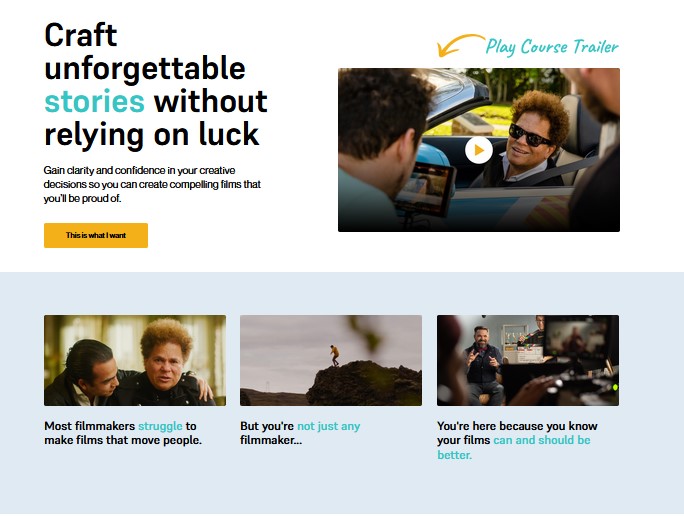
The Science of Storytelling is a comprehensive filmmaking course created by Patrick Moreau and the Emmy Award-winning Muse Storytelling team. Patrick Moreau is a 5-time Emmy winner who has created films for global brands including Apple, Nike, and the United Nations, and served as the lead storytelling partner for Four Seasons. This program teaches the Muse Storytelling Process, a science-backed methodology that combines psychology, narrative engagement research, and practical filmmaking techniques to help creators develop stories that consistently connect with and move audiences. The course includes 26 video lessons organized across 3 modules, totaling over 4 hours of training content.
Here's What You Get
This program delivers a complete education in the science and craft of impactful storytelling for filmmakers.
Course Stats:
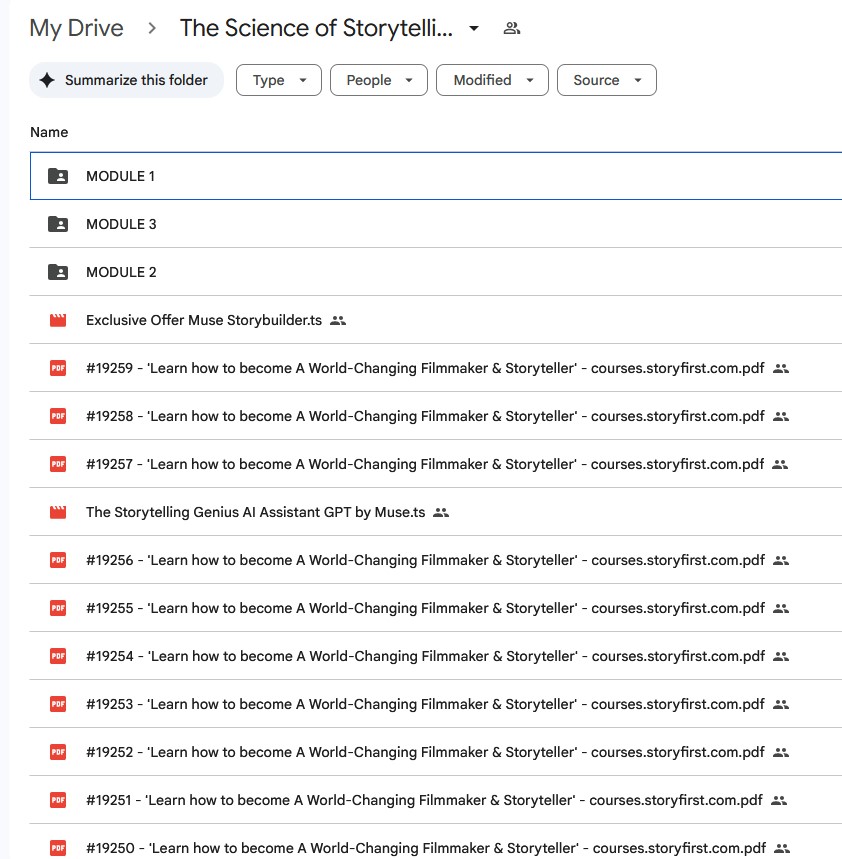
26 video lessons | 74 downloadable PDFs | 1 spreadsheet | 1 image resource | 4h 14m 26s of video content | 3.44 GB total
✅ Module 1: Story Fundamentals & The Muse Framework — 8 video lessons (1h 18m 21s) covering what story is, why it works, the critical forces in story, the Four Pillars framework (People, Plot, Places, Purpose), and the Muse scientific approach backed by academic research in narrative persuasion and media psychology
✅ Module 2: Storyfinding Process & The 7 Story Types — 8 video lessons (1h 02m 56s) teaching the complete Storyfinding methodology including how to identify the Big 3 Things in people, develop curiosity-driven plots, extract purpose through keywords, and recognize the 7 Types of Stories with practical walkthroughs and outreach templates
✅ Module 3: Storybuilding & Production — 8 video lessons (1h 26m 10s) guiding you through the Three Creative Milestones, developing story keywords, choosing and developing characters with specific roles, creating storyboards using the Hook and Jab technique, wrapping plot in place, and making your first film with Muse
✅ Complete Resource Library — 74 PDFs including video transcripts for every lesson, the official Muse Storyfinding Manual 2023, Character Tracking Guide with spreadsheet template, WCF Keywords worksheets, Character Brief templates with samples, storyboard templates, sample storyboards from “I Am Dust,” Ultimate List of Storyfinding Questions, Outreach Templates, and academic research papers on narrative persuasion and identification
✅ Bonus Training Videos — Exclusive training on the Muse Storybuilder software and introduction to the Storytelling Genius AI Assistant GPT
Why Buy From BuyCheapCoursesNow?
✅ Verified Content — Every module and resource included exactly as listed, or your money back
✅ Instant Digital Delivery — Access your course files within minutes of purchase
✅ Best Value Guaranteed — Premium courses at a fraction of the original price
✅ Secure Payment — Protected checkout via PayPal & Stripe with full SSL encryption
✅ 30-Day Money-Back Guarantee — Complete refund if you're not satisfied, no questions asked
What You Will Learn in The Science of Storytelling
✅ The Four Pillars of Story Framework — Master how to balance People, Plot, Places, and Purpose to evoke emotion, engagement, trust, and deeper meaning in your audience
✅ Narrative Transportation Techniques — Apply research-backed methods to make your audience enter the story world and shift their opinions through character identification and psychological engagement
✅ The Muse Storyfinding Process — Execute the step-by-step methodology for discovering authentic stories by identifying the Big 3 Things in people (their motivations, values, and transformations)
✅ Plot as Curiosity Architecture — Design story structures that maintain audience engagement by strategically withholding and revealing information to create forward momentum
✅ Purpose-Driven Keywords Development — Extract and articulate the core themes and keywords that align your clients, team, and audience around a unified story purpose
✅ The 7 Types of Stories Classification — Identify which of the 7 story archetypes fits your subject and apply the specific techniques for each type
✅ The Three Creative Milestones System — Navigate the production process through Muse's structured approach to pre-production, production, and post-production storytelling decisions
✅ Character Role Assignment — Choose and develop your lead character, then build supporting character roles that enhance the protagonist's journey and message delivery
✅ The Hook and Jab Technique — Craft opening sequences that immediately capture attention (the Hook) while setting up the emotional payoff (the Jab) that comes later in the film
✅ Storyboard Development Method — Create visual story plans using Muse's storyboard templates and process, ensuring every shot serves the narrative purpose
✅ Place as Authenticity Element — Use location and environment strategically to ground stories in specific, believable contexts that enhance credibility
✅ Client Alignment Strategies — Apply the Storyfinding Manual and Character Tracking tools to ensure high-level alignment between you, your clients, and your production team before filming begins
Who Should Take The Science of Storytelling?
- Commercial Filmmakers Stuck as the “Hired Tripod” — You take client projects but feel like you're just executing someone else's vision with no creative input. You've tried pitching story ideas but get pushback or blank stares. The Muse Storyfinding Process gives you a repeatable framework and language to articulate story decisions that clients understand and respect, elevating you from technician to Strategic Partner.
- Documentary Filmmakers Struggling With Narrative Structure — You have great subjects and footage but your films feel flat or meandering. You know there's a powerful story in there but can't figure out how to structure it. The Four Pillars framework and the Hook and Jab technique show you exactly how to architect emotional engagement and narrative momentum.
- Brand Video Producers Who Can't Quantify Their Value — Your clients see video as a commodity and push back on pricing. You make quality work but struggle to explain why storytelling matters beyond production quality. The Science of Storytelling grounds you in peer-reviewed research on narrative persuasion and behavior change, giving you the language and evidence to justify premium positioning.
- YouTube Creators and Content Makers Chasing Retention — You understand the algorithm but your content doesn't connect emotionally. Your audience watches but doesn't engage or take action. Muse teaches you how character identification and narrative transportation work psychologically, so you can design stories that shift opinions and drive behavior, not just views.
- Film School Graduates With Theory But No Practical Process — You understand story theory from your education but freeze when facing a real client project or documentary subject. You need a systematic approach, not just concepts. The Storyfinding Manual, Character Tracking Spreadsheet, and step-by-step walkthroughs give you a production-ready workflow.
- Experienced Filmmakers Seeking Science-Backed Methods — You've relied on intuition and experience but want to understand why some stories work and others don't. You're interested in the psychology and research behind audience engagement. Muse provides academic papers on narrative persuasion, media psychology, and identification theory, along with a methodology tested with Boise State University.
Complete Curriculum Breakdown
Module 1: Story Fundamentals & The Muse Framework
This foundational module establishes what story is at its core, why humans respond to narrative, and introduces the Muse scientific framework backed by peer-reviewed research. You'll understand the critical forces at work in every story and learn the Four Pillars system that structures all effective storytelling.
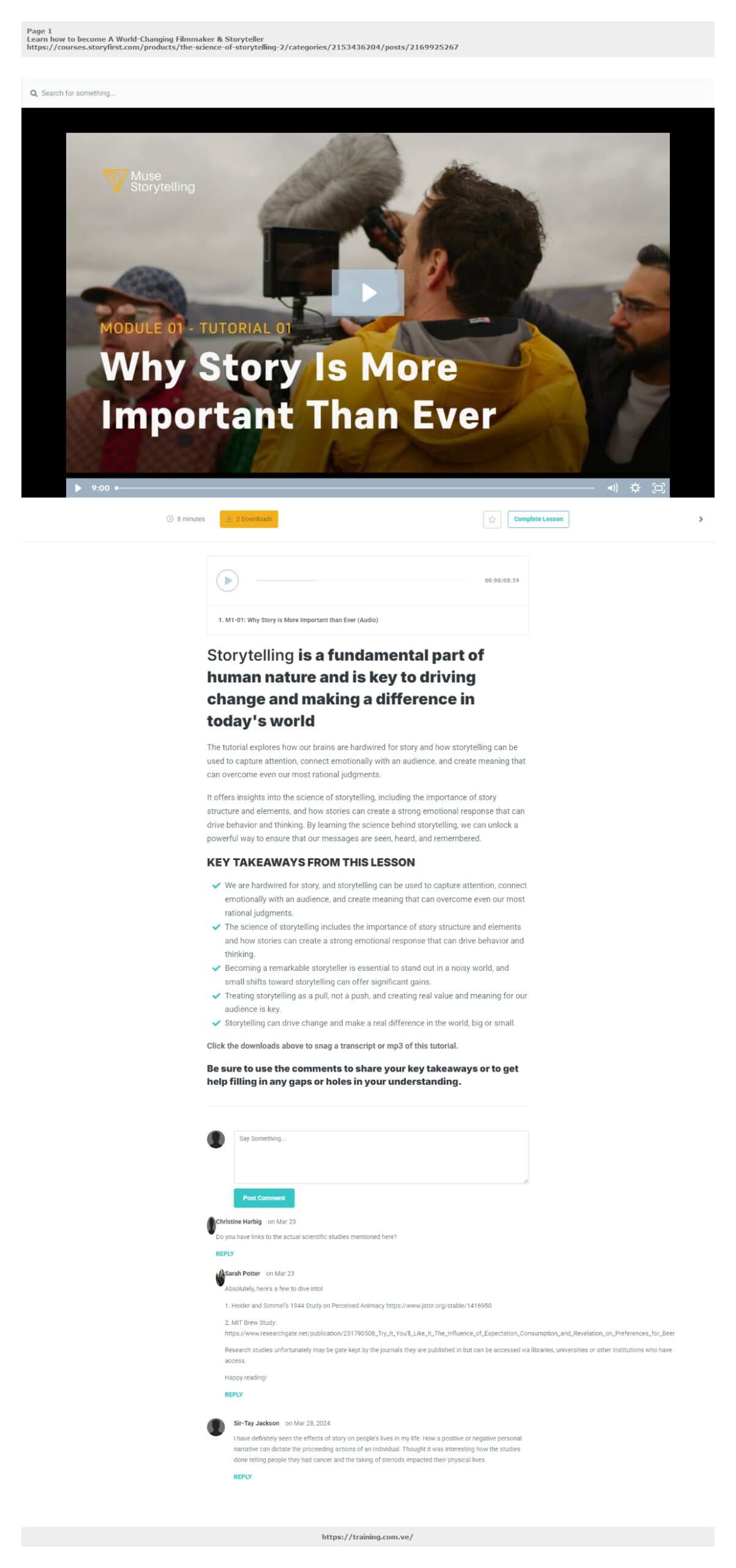
- Lesson 1.1: Why Story is More Important than Ever
- Lesson 1.2: What Exactly Is A Story
- Lesson 1.3: Who You're Learning From
- Lesson 1.4: Two Critical Forces in Story
- Lesson 1.5: The Four Pillars Of Story
- Lesson 1.6: The Science of Storytelling (Part 1)
- Lesson 1.7: The Science of Storytelling (Part 2)
- Lesson 1.8: An Overview Of The Process
- Included Resources: Module 1 lesson transcripts (8 PDFs), academic research papers including “A Conceptual Framework of Narrative Persuasion,” “Enhancing Attitudes Toward Stigmatized Groups With Movies: Mediating and Moderating Processes of Narrative Persuasion,” “Identification and Perspective” study, “Not Whodunit But Whydunit: Story Characters Motivations Influence Audience Interest in Services,” “Sympathy and Callousness” research, and Media Psychology article
Module 2: Storyfinding Process & The 7 Story Types
This module teaches the Muse Storyfinding methodology—a systematic approach to discovering authentic stories before production begins. You'll learn how to identify character motivations, structure curiosity-driven plots, extract thematic keywords, and use location strategically, culminating in understanding the 7 Types of Stories framework.
- Lesson 2.1: Shifting Your Approach to Filmmaking
- Lesson 2.2: Storyfinding 101
- Lesson 2.3: People As The Big 3 Things
- Lesson 2.4: Plot As Curiosity
- Lesson 2.5: Purpose as the Keywords
- Lesson 2.6: Places As Authenticity
- Lesson 2.7: Step By Step Storyfinding Process Walkthrough
- Lesson 2.8: The 7 Types Of Stories
- Included Resources: Module 2 lesson transcripts (8 PDFs), Muse Storyfinding Manual 2023 (complete methodology guide), Character Tracking Spreadsheet (.xlsx), Character Tracking Guide (PDF), WCF Storyfinding Ultimate List of Questions (2 versions), Outreach Templates for client/subject communication, 7 Types of Story Overview, Schwartz's Model of Human Values reference chart
Module 3: Storybuilding & Production
The final module takes you from story discovery to production execution. You'll learn how to develop story keywords that guide all creative decisions, select and develop character roles, create detailed storyboards, craft compelling opening sequences with the Hook and Jab technique, and assemble all narrative elements into a cohesive film ready for production.
- Lesson 3.1: The Three Creative Milestones
- Lesson 3.2: Developing Your Story Keywords
- Lesson 3.3: Choosing Your Lead Character
- Lesson 3.4: Additional Character Roles
- Lesson 3.5: Developing Your Storyboards
- Lesson 3.6: The Hook and Jab
- Lesson 3.7: Wrapping Plot In Place
- Lesson 3.8: Making Your First Film With Muse
- Included Resources: Module 3 lesson transcripts (8 PDFs), WCF Keywords worksheet and sample, WCF Character Brief template and sample, WCF Storyboards printable templates, Sample Storyboards from the film “I Am Dust” (11.4 MB detailed example)
Bonus Content
Additional training resources to expand your Muse Storytelling capabilities and access advanced tools.
- Exclusive Offer: Muse Storybuilder (16m 51s video introduction to the proprietary software platform)
- The Storytelling Genius AI Assistant GPT by Muse (10m 08s tutorial on using the custom AI assistant for 24/7 story guidance)
About Patrick Moreau and the Muse Storytelling Team

Patrick Moreau is the founder of Muse Storytelling and co-founder of StillMotion, with a background in psychology and a focus on the science of narrative engagement. He began his filmmaking career with weddings but approached the work differently—focusing on the emotional core of each couple's story rather than traditional event documentation. This unique perspective caught the attention of major brands and led to high-profile projects that earned him and his team 5 Emmy Awards.
Verified Credentials:
✅ 5-time Emmy Award winner for commercial and documentary film work
✅ Created films for global brands including Apple, Nike, AT&T, Toyota, and the NFL
✅ Lead storytelling partner for Four Seasons — produced over 100 films at dozens of Four Seasons properties worldwide, including their most-viewed film of all time
✅ Taught the science of storytelling at the United Nations in Geneva, and has conducted workshops in over 100 venues globally
✅ Trained over 10,000 filmmakers worldwide in the Muse Storytelling methodology
✅ Published research in academic journals including the Journal of Media Psychology, and actively develops and tests storytelling hypotheses with Boise State University as research partner
✅ Educational partner with major platforms — has taught for Canon, Vimeo, and YouTube on the intersection of storytelling, virality, and narrative psychology
✅ Collaborated with behavioral scientists including Jonah Berger (author of “Contagious”) and Dr. Paul Zak (neuroeconomist studying trust and narrative) on storytelling research
Patrick Moreau has appeared on numerous podcasts including “Grow Your Video Business” and has been featured in interviews on platforms like Nicholas Kusmich's blog and Live Institute/Medium, where he shares storytelling insights and the science behind the Muse methodology. His work combines the art of filmmaking with peer-reviewed psychology research to create a systematic, repeatable process for developing stories that shift perception and drive behavior change.
What Problems Does The Science of Storytelling Solve?
“I make technically good films but they don't emotionally connect with audiences” — The Four Pillars framework teaches you exactly how to balance People, Plot, Places, and Purpose to evoke specific emotions. Module 1 breaks down the psychology of narrative transportation and character identification, showing you why technical quality alone doesn't create engagement and which story elements actually trigger emotional response.
“I struggle to find the story in real people and situations before filming” — The Storyfinding Process (Module 2) gives you a systematic pre-production methodology. You'll use the Character Tracking Spreadsheet, the Ultimate List of Storyfinding Questions, and the Big 3 Things framework to discover authentic narratives through structured interviews and observation, rather than hoping you'll “find it in the edit.”
“My clients don't understand or value storytelling—they just want a video” — The Science of Storytelling grounds you in peer-reviewed research papers (included in Module 1) that prove how narrative persuasion changes behavior and attitudes. You'll learn how to articulate story decisions using psychological principles and business outcomes, not subjective artistic preference, which transforms client conversations from “I like/don't like” to “this approach will achieve your goal because research shows…”
“I don't know how to structure my documentary or brand film—it feels like random scenes” — Module 3's Hook and Jab technique, combined with the Plot as Curiosity framework from Module 2, shows you how to architect narrative momentum. You'll learn exactly where to place story reveals, how to withhold and release information strategically, and how to create storyboards that ensure every scene serves a specific structural purpose in the emotional journey.
“I want to charge premium rates but can't justify my pricing beyond production quality” — The course positions you as a Strategic Partner, not a hired camera operator. The Storyfinding Manual, Keywords Development process, and Character Brief templates demonstrate a sophisticated pre-production methodology that aligns stakeholders and de-risks production. You're selling a proven system for behavior-changing communication, not just video deliverables.
“I freeze when facing a blank page or new project—I don't have a repeatable creative process” — Muse provides a complete workflow: Storyfinding (Module 2) for discovery, the Three Creative Milestones (Module 3) for production planning, and specific tools like the Character Tracking Spreadsheet, Keywords Worksheet, and Storyboard templates. You'll never start a project without a clear roadmap again.
What Makes The Science of Storytelling Different
- Science-Backed Methodology with Academic Research — Unlike courses that teach “storytelling secrets” or personal preferences, Muse provides peer-reviewed research papers in narrative persuasion, media psychology, and character identification. The methodology is developed and tested in partnership with Boise State University and grounded in behavioral psychology. You're learning proven principles, not opinions.
- The Four Pillars Framework — People, Plot, Places, and Purpose is Muse's proprietary system for analyzing and constructing stories. Each pillar has a specific psychological function: People creates identification, Plot maintains curiosity, Places establishes authenticity, and Purpose delivers meaning. This framework gives you a diagnostic tool to identify what's missing when a story isn't working.
- Pre-Production Storyfinding System — Most filmmaking courses focus on production technique or post-production editing. Muse dedicates an entire module to finding the story before you film through the Storyfinding Process, complete with a manual, character tracking tools, and question frameworks. This front-loads creative decisions and dramatically reduces production risk.
- The Hook and Jab Technique for Opening Sequences — This specific narrative device teaches you how to open films by immediately engaging viewers (the Hook) while simultaneously planting an emotional setup that pays off later (the Jab). It's a concrete, repeatable structure for first-minute engagement that keeps audiences watching.
- Real-World Client Work Focus — The course isn't designed for aspiring narrative filmmakers making personal projects. It's built for commercial filmmakers, documentary producers, and brand storytellers who work with clients. The Outreach Templates, Character Brief samples, and client alignment strategies are all designed for professional production environments.
- 5-Time Emmy Winner Teaching From High-Stakes Experience — Patrick Moreau isn't teaching theory—he's teaching the process he used to create films for Apple, Nike, the NFL, and Four Seasons. The methodology has been proven at the highest levels of commercial filmmaking and brand storytelling, where stories must drive measurable business outcomes.

Frequently Asked Questions About The Science of Storytelling
What is The Science of Storytelling about?
The Science of Storytelling is a filmmaker education program that teaches the Muse Storytelling Process—a science-backed methodology for developing stories that consistently connect with and move audiences. The course covers the psychological principles of narrative persuasion, a systematic Storyfinding process for discovering authentic stories, the Four Pillars framework (People, Plot, Places, Purpose), and practical production techniques including character development, storyboarding, and the Hook and Jab opening structure.
Who created The Science of Storytelling?
The course was created by Patrick Moreau and the Muse Storytelling team. Patrick Moreau is a 5-time Emmy Award-winning filmmaker and founder of Muse Storytelling, with a background in psychology and narrative engagement research. He has created films for global brands including Apple, Nike, and the United Nations, served as lead storytelling partner for Four Seasons (producing over 100 films at their properties), taught storytelling at the United Nations in Geneva, and trained over 10,000 filmmakers worldwide in the Muse methodology.
What is included in The Science of Storytelling?
The program includes 26 video lessons totaling 4 hours 14 minutes 26 seconds, organized across 3 modules. You receive 74 downloadable PDF resources including transcripts for all lessons, the complete Muse Storyfinding Manual 2023, Character Tracking Guide and Spreadsheet (.xlsx), WCF Keywords worksheets and samples, Character Brief templates with examples, storyboard templates, sample storyboards from the film “I Am Dust,” Ultimate List of Storyfinding Questions, Outreach Templates for client communication, and 5 academic research papers on narrative persuasion and media psychology. The complete package is 3.44 GB delivered as downloadable .ts video files and PDF documents.
Who is The Science of Storytelling best suited for?
The course is designed for commercial filmmakers, documentary producers, brand video creators, and YouTube content makers who want to create emotionally engaging work that drives behavior change. It's particularly valuable for filmmakers who feel stuck as “hired tripods” with no creative input, producers who struggle to structure documentary narratives, brand storytellers who can't articulate their value beyond production quality, and experienced creators who want to understand the psychology and science behind why stories work rather than relying solely on intuition.
What will I learn in The Science of Storytelling?
You'll learn the Four Pillars of Story framework for balancing People, Plot, Places, and Purpose; narrative transportation and character identification techniques backed by psychological research; the complete Muse Storyfinding Process for discovering authentic stories before production; Plot as Curiosity architecture for maintaining audience engagement; Purpose-Driven Keywords development for aligning clients and teams; the 7 Types of Stories classification system; the Three Creative Milestones production workflow; character role assignment and development; the Hook and Jab technique for crafting compelling opening sequences; and storyboard development methods using Muse's templates and approach.
What format is The Science of Storytelling delivered in?
The course is delivered as downloadable video lessons in .ts format (standard video files playable on all devices), PDF workbooks and guides, one Excel spreadsheet (.xlsx) for character tracking, and one JPG image resource. The complete package totals 3.44 GB and includes 26 videos (4h 14m 26s total duration), 74 PDFs (including lesson transcripts, manuals, templates, and academic research papers), 1 spreadsheet, and 1 image file, organized across 3 module folders plus root-level bonus content.
Does The Science of Storytelling include any bonus materials?
Yes, the program includes two bonus video lessons beyond the main 3-module curriculum: “Exclusive Offer: Muse Storybuilder” (16 minutes 51 seconds), which introduces the proprietary Muse Storybuilder software platform for story development, and “The Storytelling Genius AI Assistant GPT by Muse” (10 minutes 8 seconds), which teaches you how to use Muse's custom AI assistant for 24/7 story guidance and support.
What is Patrick Moreau known for?
Patrick Moreau is known as a 5-time Emmy Award winner for commercial and documentary film work, founder of Muse Storytelling and co-founder of StillMotion, creator of films for major brands including Apple, Nike, AT&T, Toyota, and the NFL, and developer of the Muse Storytelling Process taught to over 10,000 filmmakers worldwide. He served as lead storytelling partner for Four Seasons (producing over 100 films including their most-viewed film of all time), has taught the science of storytelling at the United Nations in Geneva, and has published research in the Journal of Media Psychology through his partnership with Boise State University.
How is The Science of Storytelling different from other filmmaking courses?
The course is built on peer-reviewed research in narrative persuasion and media psychology, not personal opinion or “filmmaking secrets.” It includes actual academic papers and is developed in partnership with Boise State University. The Four Pillars framework (People, Plot, Places, Purpose) is a proprietary diagnostic system unique to Muse. Unlike most courses that focus on production technique, Muse dedicates an entire module to the pre-production Storyfinding Process with systematic tools for discovering stories before filming. The Hook and Jab technique provides a specific, repeatable structure for opening sequences. The course is designed specifically for commercial filmmakers and brand storytellers working with clients, not personal narrative filmmaking, and includes client alignment tools, outreach templates, and business positioning strategies.


